I build AI agents that run in production, not demos.
I decide which processes are worth handing to an agent, give each agent the knowledge, tools and clear limits it needs, connect it to the company’s systems — and make sure it runs around the clock and recovers on its own.

- Send revised summer-promo budget by Thursday — Dana
- Check call tracking on the new landing page — Luis
Three systems in daily use
01 / productionBuilt for a US marketing agency serving home-service businesses. Clients stay anonymous; the numbers are real.
One Slack channel, 18 expert agents behind it
An agency team asks questions about its clients in Slack. A fleet of agents answers — each one an expert on a single client.
- scale38 Claude Code agents on two servers, one expert agent per client.
- routingA router agent sends each question to the right client agent.
- knowsMeetings, tasks, conversations and four ad platforms of its client.
- safetyRead-only for the team — enforced in code, not in the prompt.
- uptimeA watchdog checks every minute and rebuilds crashed agents.
From client meeting to approved task in ~15 minutes
Account managers used to type up tasks by hand after each call — items got lost, with delays of up to 2 days.
- triggerThe finished Zoom transcript starts the pipeline; polling as a safety net.
- proposeAn LLM proposes tasks with likely owners — also for client requests in Slack.
- approveA human approves every proposal before anything is created.
- sinceIn daily use since April 2026, for 30+ client meetings a week.
One look every morning instead of a login per ad account
The whole client portfolio and each client: budgets, cost per lead, lead sources and tracking — with trends, traffic lights and alerts.
- dailyMy first look every morning — weekly and monthly trends, not just today.
- alertsCost per lead too high or too low, budget pacing, a card that needs renewing.
- safetyRead-only on every ad platform; aggregates only, no personal data.
- honestMissing data stays missing; a failed run never deploys.
- auditReal case: the real cost per lead was about 60 % above what Google reported.
All projects
02 / projectsHow I work
03 / principlesAgents propose, people confirm. Each decision becomes data, so clear cases can be automated later.
Permissions are set in code, per client — read-only by default.
Blind tests instead of gut feeling: the judge never sees the source. 56 documented test cycles.
Watchdog, automatic rebuilds, restart-loop protection, and knowledge kept in files — nothing is lost after a restart.
Creative AI Lab
04 / design with agentsAgents do not only answer questions. Given the right tools, they build things you can look at.
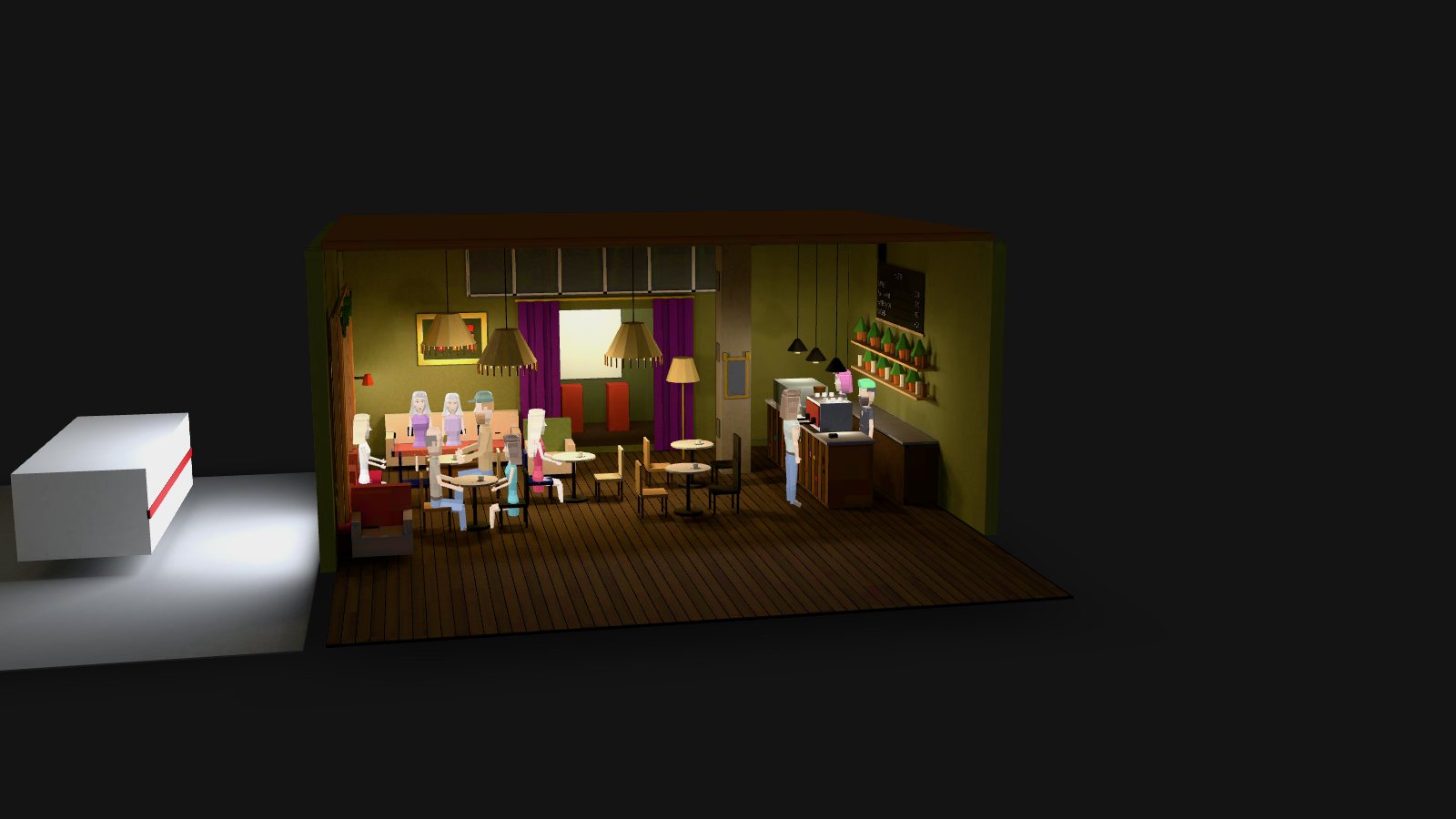
Berlin in 3D
From two photos of a café in Neukölln, my agents built an explorable 3D scene — by writing Blender code, rendered locally on my own GPU.
Open the 3D sceneFrom an address to a 3D scene
- Address
- Nominatim
- OSM · Overture · LoD2
- Blender, headless
- GLB
- Viewer
Streets come from open geodata, interiors like the café from photos — always as Blender code. AI mesh generators were tested and rejected.
Read the case study